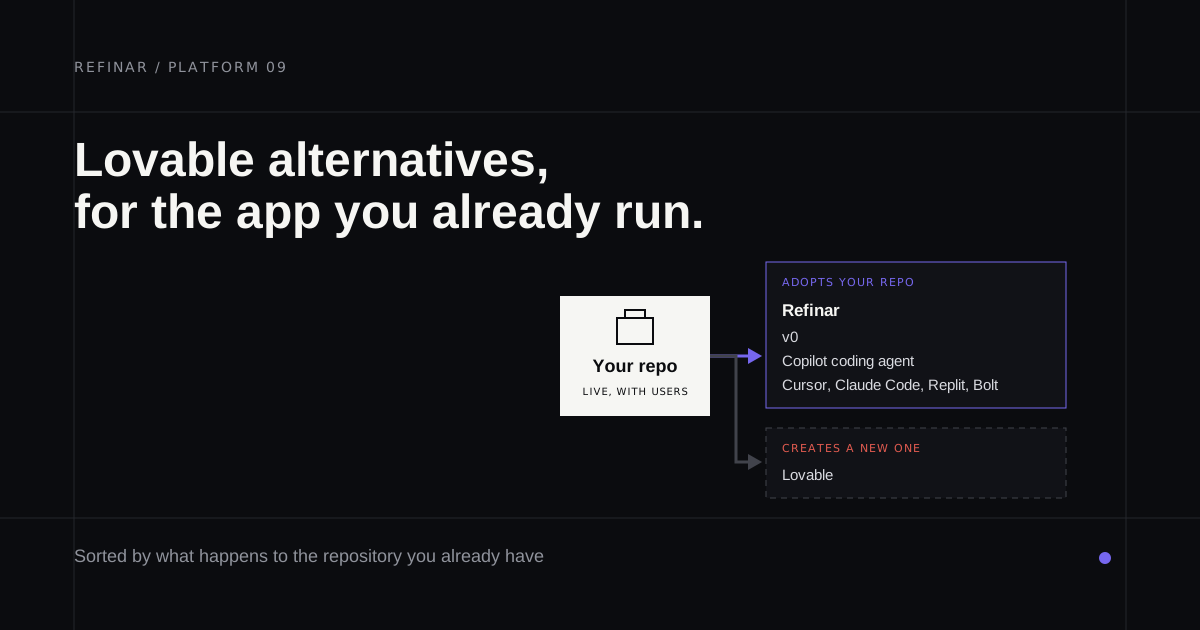
People go looking for Lovable alternatives for different reasons. Credits start to matter more once most requests are fixes. A developer joins and wants their own editor. The app needs a backend language Lovable doesn't build in. Or the code already lives in a GitHub repository that Lovable, whose Git sync only ever creates new repositories, was never going to open.
Those reasons point at different tools, so this list is sorted by what you're bringing. If it's an app with users, you need something that can open it. If it's still an idea, you've got more room to choose.
Refinar
Best for: an app already on GitHub that someone who doesn't code needs to change, with a developer signing off.
Refinar opens the repository you already have, and GitHub is the only host it supports. The app runs in full in a cloud sandbox, server side included, hooked up to its real services. Whoever's asking types the change or clicks the spot in the preview they mean, and an AI agent makes it in front of them. They can click through the result, and undo it, before it's published or becomes a draft pull request (how it works). Sign-in, payment and customer-data changes don't go live on their own: the safe part is built, and your developer gets the rest with a brief, or, if you don't have one, a developer from Refinar looks at it within 4 hours on business days. Writes to the app's services are flagged and need someone's approval. If the app started in Lovable, this walkthrough goes from Git sync to a first change.
Every plan comes with twenty teammates, from $50 a month for about a hundred requests, and unused credits roll over while you stay subscribed (pricing). If you haven't built anything yet and would rather not prompt it into existence, Refinar's Foundation build is the other route. A developer writes the first version over 3 business days, and the price is fixed at $1,000 (build my app).
Bolt
Best for: the nearest like-for-like switch, as long as your backend is JavaScript.
Bolt vs Lovable is where a lot of people start, because the two feel alike, a chat on one side and a running preview on the other. The differences show up once you have code.
| Bolt | Lovable | |
|---|---|---|
| Opens an existing GitHub repo | Yes, from a list or by URL | No |
| What it builds | JavaScript frontends with Node backends | TanStack Start apps (React with Vite before 13 May 2026) |
| First paid plan | Pro, $25 a month, from 10M tokens | Pro, $25 a month, 100 credits |
| Teams | $30 per member a month | Unlimited members on every plan |
Prices are from bolt.new/pricing and Lovable's plans page, checked on 29 September 2026.
Bolt's Git docs mention two habits to understand before you connect a live app. It commits automatically whenever a change doesn't break the project, and imports start on main, so create a branch first. And the GitHub connection can only be managed by the project owner, which means a collaborator's edits sync the next time the owner opens the project. Refinar for Bolt apps covers what else changes once the code lives on GitHub.
Replit
Best for: a developer taking a Lovable export into a full workspace.
Replit's importer names Lovable as a source, and the move runs through GitHub. Sync the project to a repository, then pick Lovable in Replit's importer. Your code and schema make the trip. Your Supabase rows and your secrets stay behind.
Core is $20 a month. For the rest of what changes, including the two configuration files Replit adds, see Replit vs Lovable.
v0
Best for: Next.js teams whose production already runs on Vercel.
v0's Import from GitHub opens an existing repository, private repos and monorepos included, and works on a branch of its own. Publishing goes through a pull request that respects your branch protection, so review still happens where your team already does it.
The strings attached are Vercel's. Every import is tied to a Vercel project, and the preview only reads Development variables, so anything behind a live key needs test credentials seeded first. Plus is $30 per user a month. The v0 GitHub guide goes through the import step by step.
Cursor or Claude Code
Best for: when the person making changes is a developer.
If whoever changes the app writes code, you may not need a builder at all. Cursor opens any folder or repository. Anthropic's docs describe Claude Code as reading your codebase and running commands in it, from the terminal, an IDE, a desktop app or the browser.
You don't have to leave Lovable to bring them in, either. Lovable's own docs say a project's synced branch accepts pushes from any Git-capable coding assistant, so a developer can join while everyone else keeps building in Lovable. Cursor's Individual plan is $20 a month, and how the two share an app is laid out in Lovable vs Cursor.
Base44's Base Code
Best for: a team that likes Base44 and wants it working on a repository it already has.
Base44 is another prompt-to-app builder, and its Base Code product connects a web or full-stack repository you already keep on GitHub. Changes happen through its AI chat on a working branch, and each can go out as a pull request for review. If Base44 is the platform you're weighing, Base44 alternatives covers it properly.
Which one
- The app's on GitHub and whoever wants changes made doesn't code: Refinar.
- You want Lovable's feel and your backend is JavaScript: Bolt.
- A developer is moving a Lovable export into a cloud workspace: Replit.
- Next.js, already on Vercel: v0.
- A developer is making the change: Cursor or Claude Code.
- No app yet: stay on Lovable, or have a developer build it through Refinar's Foundation build.
For how each builder treats your repository in a single table, see AI app builders for an existing app. If credits are the reason you're looking, Lovable pricing shows where they go, and if you're still choosing a builder for something new, Emergent vs Lovable compares the two builders.
If you're leaving Lovable with a repository in hand, open it in Refinar and try one real change before you commit to anything else.