Somewhere around the third month of a Lovable project, the credit counter starts to matter. The app is live and most of what you ask for now is a fix, so the plan you picked on day one no longer explains the bill. Here's how the pricing works, and where the credits go once you're maintaining an app instead of building one.
If the app is finished and its code already syncs to GitHub, Lovable isn't the only place to pay for fixes. The closing section covers Refinar, which changes an existing app from its repository.
The plans
| Plan | Price | Credits | What it adds |
|---|---|---|---|
| Free | $0 | 5 a day, capped at 30 a month | Private projects, Git sync |
| Pro | from $25 a month | from 100 a month, plus 5 a day | Custom domains, code editing, code download, no badge |
| Business | from $50 a month | from 100 a month, plus 5 a day | SSO, Security center, internal publishing, priority support |
| Enterprise | contact sales | by contract | SCIM, audit logs, dedicated support |
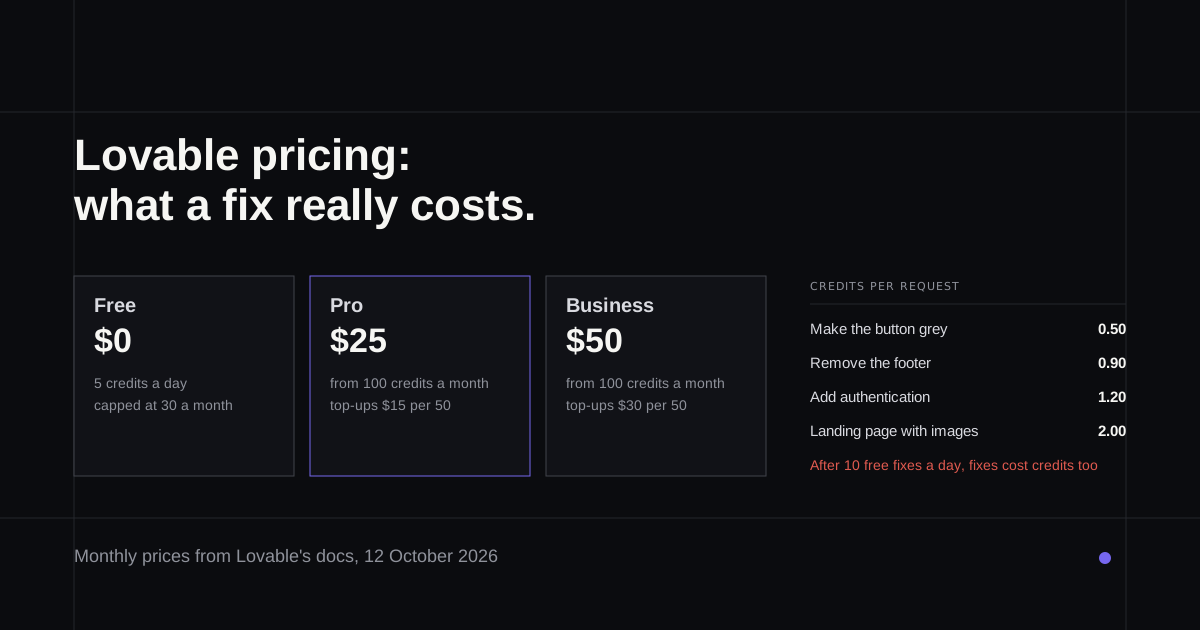
Pro and Business are sold in credit tiers. Pro goes from 100 credits for $25 to 800 for $200 and keeps climbing; Business is roughly double the price at each tier. Paying yearly knocks the Pro starter down to $21 a month. Both paid plans also get 5 build credits a day on top, with no monthly cap. Students and teachers get half off Pro 100 for up to a year. Those are the numbers in Lovable's plans and credits docs on 12 October 2026, and they move often.
Lovable doesn't charge per seat, which is rarer than it should be. Every plan, Free included, has unlimited workspace members.
How credits get spent
Everything comes out of one balance. Hosting the app on Lovable Cloud and running the AI features inside it draw from the same credits as building does, after the monthly grants of 20 Cloud credits and 4 AI credits are used up.
Building is where most of it goes, and it isn't a flat rate. Build mode is charged by "the complexity of the request and the work completed." Lovable's own examples give a sense of scale:
- Make the button grey: 0.50 credits
- Remove the footer: 0.90
- Add authentication: 1.20
- Build a landing page with images: 2.00
Plan mode, where Lovable thinks through a change without touching code, costs 1 credit a message, plus whatever research Lovable runs while planning. Chat mode costs a fraction of a credit per message and comes out of a daily chat allowance first, though Lovable says that pricing is temporary and runs to 31 October 2026.
Is Lovable free?
Yes, with limits. The Free plan gives you 5 build credits a day, but only for the first 30 of the month, which works out to about six days of building before it stops until the 1st. You get private projects and GitHub sync. You don't get a custom domain, you can't edit the code yourself (the editor is read-only), you can't download the codebase as a zip, and the "Edit with Lovable" badge stays on.
For trying an idea, that's plenty. For an app with customers, you'll be on Pro the day you need your own domain.
What a fix actually costs
This is the part the plan table hides. Early on, every message builds something new. Once the app is live, more and more of them are repairs, like the form that stopped saving or the page that breaks on one particular phone.
Lovable gives every account 10 free fixes, shared between the Try to fix button and the one-click fixes in its Security view, across all your projects. Each comes back 24 hours after you use it. After ten in a day, a fix is ordinary build usage and costs credits like anything else.
Build credits follow the work done, so a request that touches more of the app costs more, and larger apps give most requests more to touch. Lovable doesn't publish a figure for that, so you won't find one guessed at here. It's still the likeliest answer when a month of small fixes costs more than the month you built the thing.
Rollover, top-ups and running out
Unused monthly credits roll over while you stay subscribed, but not forever. On monthly plans they expire two months after they were issued, and the daily and grant credits never roll over at all.
When you run low, Pro can top up at $15 per 50 credits ($0.30 each) and Business at $30 per 50 ($0.60 each). Top-ups last 12 months and can be set to buy automatically.
When you run out entirely, building stops behind a blocking dialog. If people use your app, keep an eye on the grants as well. Once your balance and the monthly Cloud and AI grants are all at zero, the published pages keep serving, but the AI features fail and the Cloud backend behind them, with its database, storage and sign-in, pauses shortly after. Topping up isn't always enough to bring it back: a paused backend may need a Wake up click in the project's Cloud settings, which is why Lovable's docs have a section titled "My deployed app stopped working."
How to spend fewer credits
- Plan before you build. A 1-credit Plan mode message that finds the real problem is cheaper than three build attempts at the wrong one.
- Edit the code yourself for small things. On paid plans, editing and saving code in Lovable's editor doesn't use credits. Changing a price or a heading by hand is free.
- Save your free fixes for real errors. They reset daily, so a stubborn bug is worth spreading over two days.
- Watch the Cloud grant if your app has steady traffic, since hosting draws from the same balance once the grant is gone.
When it's worth looking elsewhere
Lovable is priced for building. If your app is finished and the work is now small changes requested by the people who run it, it's worth asking whether you still need the builder for that. Your project can sync to GitHub on any plan, and once the code is in a repository, other tools can change it.
Refinar is one of those tools, and it's aimed at this stage. It loads the app straight from the GitHub repository into a cloud sandbox, where whoever runs the product describes a change in plain words, or points at the bit of the live preview that needs it. An AI agent makes the change while they watch. The result becomes a draft pull request, or goes live if they publish it themselves. Pricing begins at $50 a month, which buys about 100 requests, and the plan includes 20 teammates and unlimited projects. Unspent credits move into the next month for as long as you keep the plan (pricing). Refinar doesn't build apps from nothing, so it won't stand in for Lovable while you're still at the idea stage.
For the wider field, Lovable alternatives for an existing app compares the options, and if Emergent is the other builder on your shortlist, Emergent pricing does the same arithmetic for its credits and hosting fee.
The surest way to price a month of fixes on your own app is to run a handful through Refinar and count what they used.