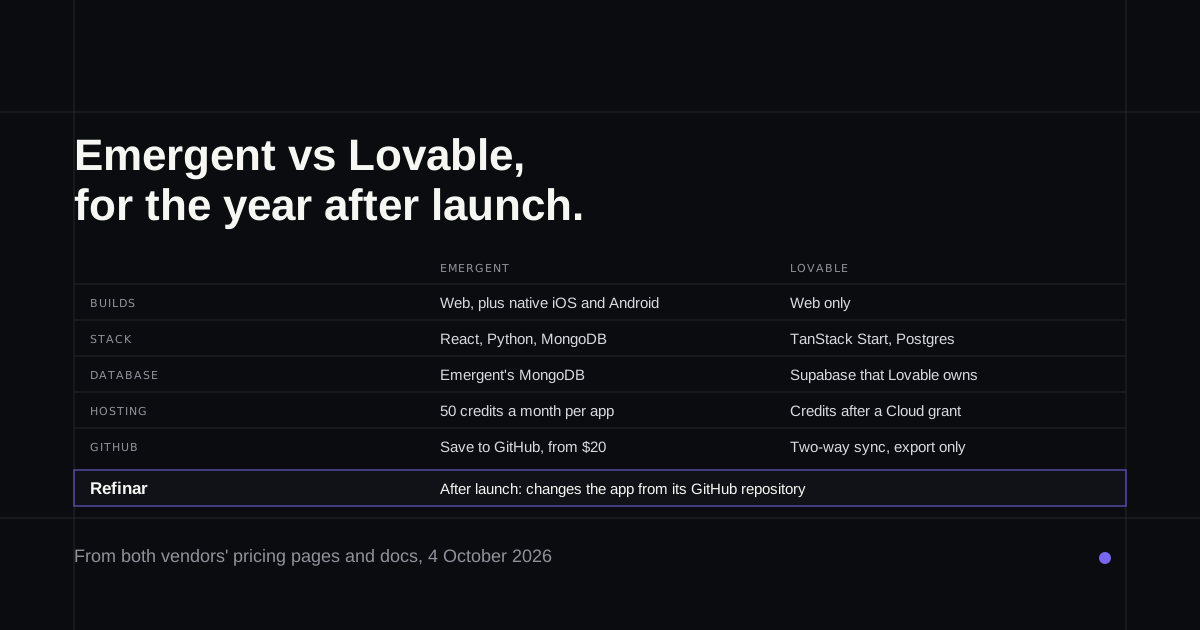
You've narrowed it down to two. Emergent and Lovable both turn a description into a working app with sign-in, a database and hosting, and both demos look great. Emergent vs Lovable gets decided later, though, when the app has customers and you're asking for the tenth small fix of the month.
Already launched on one of them and here because the fixes cost too much? Skip to Emergent alternatives.
Emergent vs Lovable side by side
| Emergent | Lovable | |
|---|---|---|
| Builds | Web, plus native iOS and Android | Web only (mobile friendly) |
| Default stack | React, Python and MongoDB; Expo for mobile | TanStack Start on Postgres |
| Database | Emergent's MongoDB, or your own Atlas on Pro | Lovable Cloud, or your own Supabase |
| Hosting | 50 credits a month per app | Credits, after a monthly Cloud grant |
| GitHub | From the $20 plan | Two-way sync on every plan |
| An existing repo | Can pull one in | Export only, to a new repo |
| Cheapest paid plan | $20 for 100 credits | $25 for 100 credits |
All checked on the vendors' own pricing pages and docs on 4 October 2026.
Emergent: one backend, web and mobile front ends
Best for: a founder who needs App Store and Play Store apps as well as a website.
Per Emergent's own blog, web apps use React, Python and MongoDB, and mobile apps use Expo (React Native) on the same FastAPI and MongoDB backend. That shared backend is the clever part. Once a web app is deployed, a Build Mobile App button creates a linked project that rebuilds only the front end, so website and phone app share one database and one login. Publishing to the stores still goes through Expo's build service and your own developer accounts.
You steer E1, the core builder, in conversation, and it runs backend tests and browser checks on its own work. Pro adds E3, in beta, which plans in phases and builds for hours unattended at roughly 30% more tokens than E1.
Lovable: web apps on a Postgres backend
Best for: a web product where you want standard Postgres underneath and the code in GitHub from day one.
Lovable's FAQ says it doesn't generate React Native projects. For phones you make the app a progressive web app, or wrap the published site with a tool like Capacitor outside Lovable. Apps created since 13 May 2026 use TanStack Start, which renders pages on the server. You don't choose the framework or the database.
The agent has more gears. Plan mode thinks a change through for 1 credit a message without touching code, drafts let you try an idea on a copy of the project, and on paid plans editing the code by hand costs nothing.
Backend, hosting and how hard it is to leave
Both run your database for you, and that's where the lock-in lives.
Emergent keeps your data in managed MongoDB on clusters shared between users. On Pro you can move it to your own MongoDB Atlas cluster (a dedicated M10 tier or above) while the app stays up, though moving back isn't self-serve. Apps can also use an external database such as Supabase, if you ask while building.
Lovable Cloud is Supabase underneath, just not your Supabase. Supabase's troubleshooting page says these projects don't appear in your dashboard, outside tools can't connect to the database and the service role key isn't available. Since 3 July 2026 you can export the database as an SQL dump, but moving to your own Supabase is still a rebuild by hand, with storage files and secrets moved separately (Lovable's Cloud FAQ).
If you'll want direct database access, decide before the first prompt, because a new Lovable project can start on your own Supabase.
Code ownership and GitHub
Emergent's GitHub integration starts on Standard. You press Save to GitHub, choose a new or existing repository and a branch, and Emergent writes the commits. Pull from GitHub brings a repository back into a new task.
Lovable includes Git sync on all its plans, the free one too, and it works with GitLab and Bitbucket as well as GitHub. It syncs both ways on one branch, so a developer's commits show up in Lovable, but it only exports: linking a project makes a fresh repository every time. One catch for later. The credentials behind Lovable's connectors and built-in AI stay with Lovable, and its docs warn those calls fail when a newer app runs on your own machine.
Pricing in short
On Emergent's pricing page on 4 October 2026, Free gives 10 credits a month, Standard costs $20 for 100 and Pro $200 for 750. Lovable's docs give Free users a daily 5 credits (30 at most in a month) and start Pro at $25 for 100.
Hosting matters more than the sticker. Emergent takes 50 credits a month per deployed app, half of Standard's allowance, while Lovable draws hosting from a 20-credit monthly Cloud grant first. The Emergent pricing and Lovable pricing guides go further.
Quality and complaints
Both earn the same praise: people who can't code ship working apps quickly. The ratings differ. On Trustpilot in early October 2026, Emergent averaged 2.8 from 636 reviews and Lovable 4.2 from about 1,760, and both companies invite customers to review.
The one-star reviews read alike: credits vanish on fixes that don't stick, or the agent breaks something that worked while repairing something else. Budget for some of that either way.
After launch, when most requests are small fixes
Once real people use the app, requests shrink to a label or a form that stopped saving, and each still costs credits. Emergent leans on checkpoints you can roll back to, while its hosting fee keeps charging whether you ask for anything or not.
Lovable has more small-change tooling. Each account gets 10 free fixes through its Try to fix button, each returning 24 hours after use, and on Pro and above, project monitoring (in beta) flags things like failing sign-ins or payments.
In both, the real danger is a small fix touching something it shouldn't. What to fix in a vibe-coded app after launch covers the habits that help.
Emergent alternatives, and when neither fits
Refinar picks up once the app exists and lives on GitHub. You describe a change or point at the part of the preview you mean, and an agent makes it in a live preview of your app. Requests that reach into logins, card payments or customer records are held back: Refinar builds what's safe and hands your developer a short write-up of the rest, or one of Refinar's developers takes it on within 4 hours if it's a business day (how it works). It doesn't build apps from nothing, and an Emergent backend won't run in its preview as things stand, since that preview can't make the direct MongoDB connection Emergent apps use by default (the Emergent exit, step by step).
Replit imports a GitHub repository you already have, including one exported from Lovable, and builds native mobile apps too (Replit vs Lovable).
Base44 feels close to both, but its apps keep calling Base44's backend through its SDK even once the code syncs to GitHub (Base44 alternatives).
Which should you pick?
- You need native phone apps: Emergent.
- You want Postgres and GitHub sync from the start: Lovable, ideally on your own Supabase.
- The app is live and the work is now small fixes: keep the builder for big features and move the fixes to a tool that works from your GitHub repository.
If your app came out of either builder and now sits in a GitHub repository, try Refinar on it with the next fix on your list.