Emergent's app builder feels cheap at the start. You describe the app, the agent writes it, and the balance in the corner barely moves. Then it goes live, and your requests change from "build me a dashboard" to "the signup email stopped arriving". This guide to Emergent pricing covers the plans, how credits get spent, and what the app costs you from that point on.
If you're past building and mostly paying for fixes, the last section covers a cheaper way to make those changes.
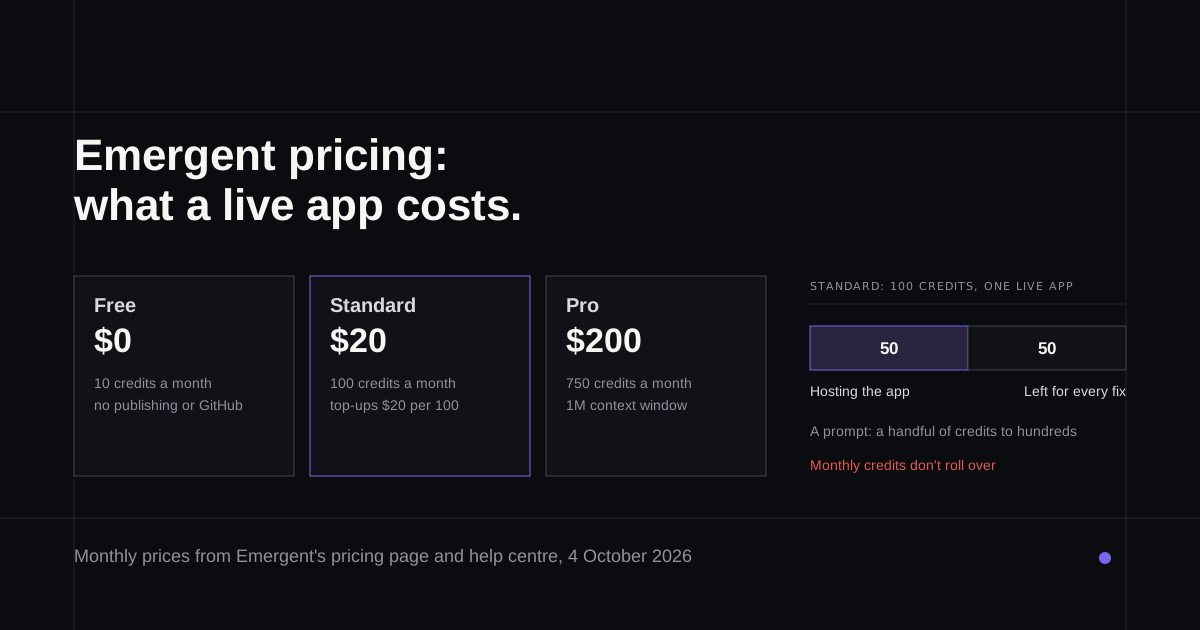
Emergent pricing plans on 4 October 2026
| Plan | Monthly | Billed yearly | Credits a month | What it adds |
|---|---|---|---|---|
| Free | $0 | not offered | 10 | The core builder, without publishing or GitHub |
| Standard | $20 | $17 a month | 100 | Private projects, publishing, GitHub, top-ups |
| Pro | $200 | $167 a month | 750 | 1M context window, custom agents, a bigger machine, priority support |
| Business and Enterprise | custom | custom | by contract | SSO, shared workspaces, audit logs, hosting in your own cloud |
Those numbers are from Emergent's pricing page and its Plans and Credits help article, both read on 4 October 2026. Each self-serve plan covers one person.
Extra credits cost $20 per 100 on a paid plan, dropping to $500 for 3,000 in bigger bundles, and they never expire. One sum worth doing before you upgrade: Pro's 750 credits work out at about 27 cents each (22 billed yearly), while a top-up credit costs 20. You'd move to Pro for the bigger context window and machine, not for cheaper credits.
Where Emergent credits go
Emergent bills by the work its agent does, and its credits guide counts more than building. Calls your live app makes to AI models through Emergent's Universal Key come out of the same balance, as do scheduled jobs and background workers.
There's no set price per message. A prompt can use a handful of credits for a small visual change or hundreds for a full feature with tests and publishing, and Maxx mode, which plans harder and checks deeper, uses significantly more.
Loops are where balances vanish. When the agent keeps retrying a fix that doesn't work, every attempt is billed. Emergent runs loop detection and says detected loops may earn an automatic rebate, so check your credit history before writing those credits off.
Is Emergent AI free?
You can start free. You can't run an app there. The Free plan gives 10 credits a month, granted at Emergent's discretion, and the help centre's comparison table (updated 29 September 2026) shows no publishing, GitHub or top-ups on Free. Private projects start on Standard too.
Ten credits is enough to see how the agent handles a small idea. Putting it online takes Standard.
What a live app costs every month
Publishing has its own meter. Emergent's help centre puts each published app at 50 credits a month, and its publishing guide says higher publishing tiers go up to 1,100. Re-publishing an update adds no new fee, and taking an app offline stops its charge.
Put that beside Standard's 100 credits. One live app takes half the month's allowance before you've asked for anything, which leaves 50 credits for every fix and tweak. Two live apps on Standard spend the whole allowance on hosting.
Fixes are metered like any build, and Emergent's docs don't mention a free fix allowance. A common breakage, by Emergent's own account, is an app that works in preview and fails live, usually because production settings differ. The agent can't see your live app, so when it says "verified", it means verified in preview.
Rollover, top-ups and a zero balance
Monthly credits don't roll over. They refill to your plan's allowance each billing cycle, and Emergent spends them before it touches top-ups, which last until used. Cancel, and that month's unused credits expire at the end of the cycle, though a live app stays up while your account holds 50 credits.
At zero the agent stops until you top up or the cycle resets. You can still open projects and edit files by hand in the built-in VS Code, and a paused job carries on once credits arrive.
How to spend fewer credits
- Give each task a budget. The task form takes a per-session limit, and the agent pauses when it's spent.
- Plan first. Plan mode builds nothing until you approve, so misunderstandings surface before any code exists.
- Break loops after two tries. Roll back or fork, and describe the problem differently. A third identical request is the expensive option.
- Make tiny edits yourself. Emergent lists hand-editing in VS Code among the things you can do at zero credits, so a changed heading doesn't need the agent.
- Unpublish apps nobody visits. Each live app costs 50 credits a month whether anyone uses it or not.
What Emergent AI reviews say
At the start of October 2026, Emergent's Trustpilot page showed 2.8 out of 5 from 636 reviews, with opinion split: 38% five-star, 48% one-star. Happy reviewers, often non-coders, got a working app quickly. Unhappy ones mention credits that disappear faster than expected, balances eaten by loops, renewals and expiring credits they didn't see coming, refused refunds and slow support. Emergent replies to 85% of negative reviews, usually within a week.
In fairness, plenty of those complaints describe written policy, like monthly credits resetting, so read the Plans and Credits page before you pay.
Getting your code and data out
On Standard and Pro, Save to GitHub pushes the project to a new or existing repository on the branch you choose and writes the commits for you. Pull from GitHub brings a repository back in. Free has no GitHub at all, and Emergent's own advice before cancelling is to save your code there first.
Data is harder. Published apps run on Emergent's managed MongoDB by default, and moving the database into your own MongoDB Atlas account is a Pro feature that needs a dedicated cluster (M10 or larger). On Standard, your code can leave in a click while your users' records stay put until someone migrates them.
When it's worth looking elsewhere
Still choosing where to build something new? Emergent vs Lovable puts the two side by side, and the Lovable pricing guide runs the same sums for Lovable.
Once the app is built and the work is a steady run of fixes, you pay a hosting fee in credits every month and then pay again, by the size of each job, for every repair. Keeping a vibe-coded app healthy after launch helps you decide whether a builder is still the right tool.
Refinar is one option for that stage. It opens the repository Emergent's Save to GitHub created (connecting it), runs the app in the cloud, and lets you describe a fix or click the broken thing in the live preview while an AI agent makes it. Each change can be undone until you publish it or send it as a draft pull request, and a fix that reaches into sign-in, payments or stored customer records goes to your developer with a brief, or to one of Refinar's developers within 4 hours on business days. Pricing is per message you send: $50 a month covers about a hundred, with 20 teammates and unused credits kept while your plan is active (pricing). Two limits. It won't build an app from nothing, and it can't run a standard Emergent backend, because its preview can't open the direct MongoDB connection those backends depend on. Leaving Emergent covers what that means and the routes that do work.
If your Emergent credits are going on repairs, connect the repository and try a few of those fixes on Refinar.