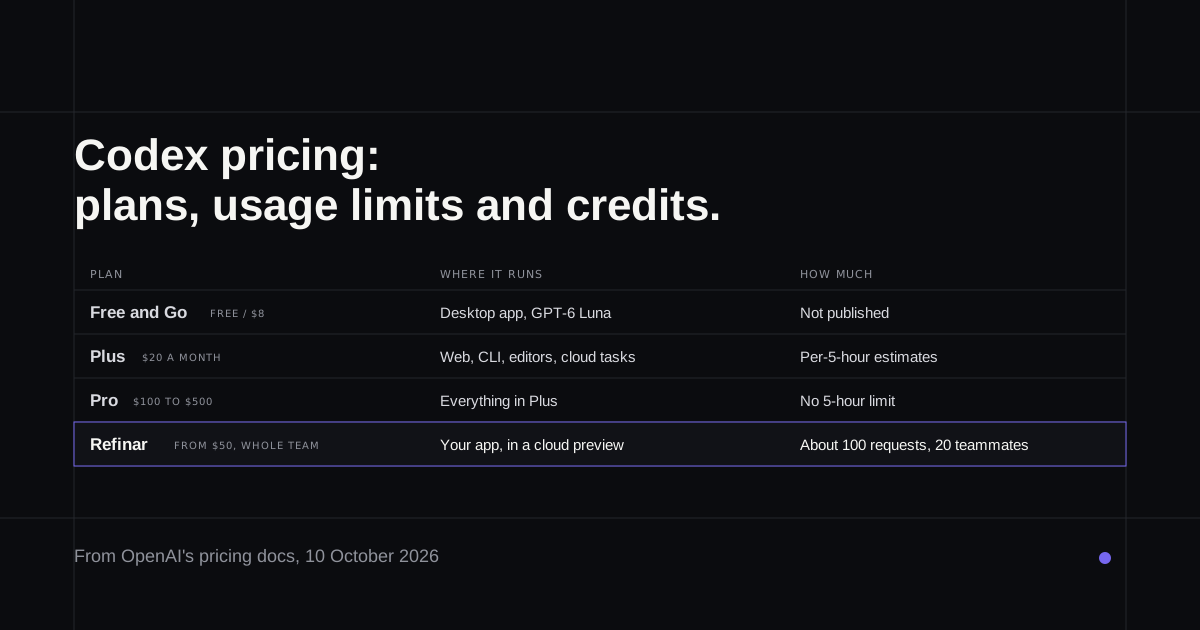
Codex pricing confuses people because there's no Codex price. Codex comes inside ChatGPT plans, from the free one up to a $500 Pro tier, and what changes between them is where Codex runs and how much of it you can use before a limit stops you. Most pages ranking for this were written before OpenAI's spring and September changes, so they quote plans and models that have since moved. Everything below comes from OpenAI's own pricing docs, read on 10 October 2026.
If you're pricing Codex so that people on your team who don't code can change your app, the final section compares a route built for them.
Codex pricing at a glance
| Plan | Price | Where Codex runs | How much you get |
|---|---|---|---|
| Free | $0 | Desktop app, GPT-6 Luna, as it rolls out | No published numbers |
| Go | $8 a month | Same as Free | No published numbers |
| Plus | $20 a month | Desktop app, web, CLI, code editors, iOS, GitHub code review, Slack | Per-5-hour estimates, plus weekly limits |
| Pro | $100 a month | Everything in Plus | 5x Plus, no 5-hour limit |
| Pro | $200 a month | Everything in Plus | 10x Plus on current terms |
| Pro | $500 a month | Everything in Plus, plus Ultrafast | Multiplier not published |
| Business, Standard seat | $20 a user yearly, $25 monthly | As Plus, plus workspace controls | Same estimates as Plus |
| Business, Premium seat | $100 a user yearly, $125 monthly | As Standard | 5x Standard, no 5-hour limit |
| Enterprise and Edu | Contract | As Business | With flexible pricing, usage scales with credits |
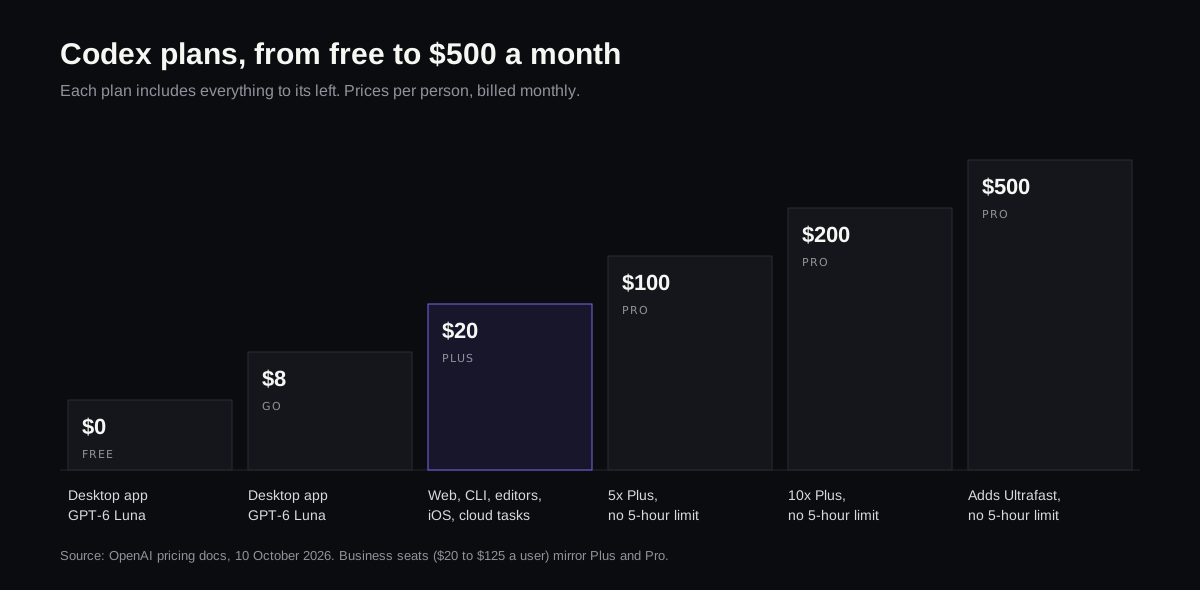
Go, Plus and Pro are billed monthly only; OpenAI's help centre says there's no annual option for them. Annual billing exists for Business and Enterprise.
Is Codex free?
Yes, in a narrow form. The Free and Go plans include "GPT-6 Luna at Standard speed in the desktop app, subject to rollout" (OpenAI's pricing page). Luna reached them on 22 September; before that, free Codex ran on an older model. Free started as a limited-time offer when the Codex app launched on 2 February 2026 and has stayed.
What Free and Go don't get is as important. OpenAI's help centre says Codex Cloud, where tasks run on OpenAI's machines and end in a pull request, "is not included with Free or Go". The web version, the CLI listing, code editors, iOS, GitHub review and Slack all start at Plus, and OpenAI publishes no usage numbers for the free tier.
Two other routes cost nothing. Verified university students in the US and Canada can claim $100 of credits, and open-source maintainers can apply for six months of Pro.
How the usage limits work
There's one pool per account, and Codex shares it with ChatGPT Work, OpenAI's agent for documents and analysis. Image generation and ChatGPT for Excel draw on it too, so a heavy week elsewhere leaves less for code.
On Plus and on a Business Standard seat, OpenAI publishes rough figures for local messages per five hours, and they vary hugely by model:
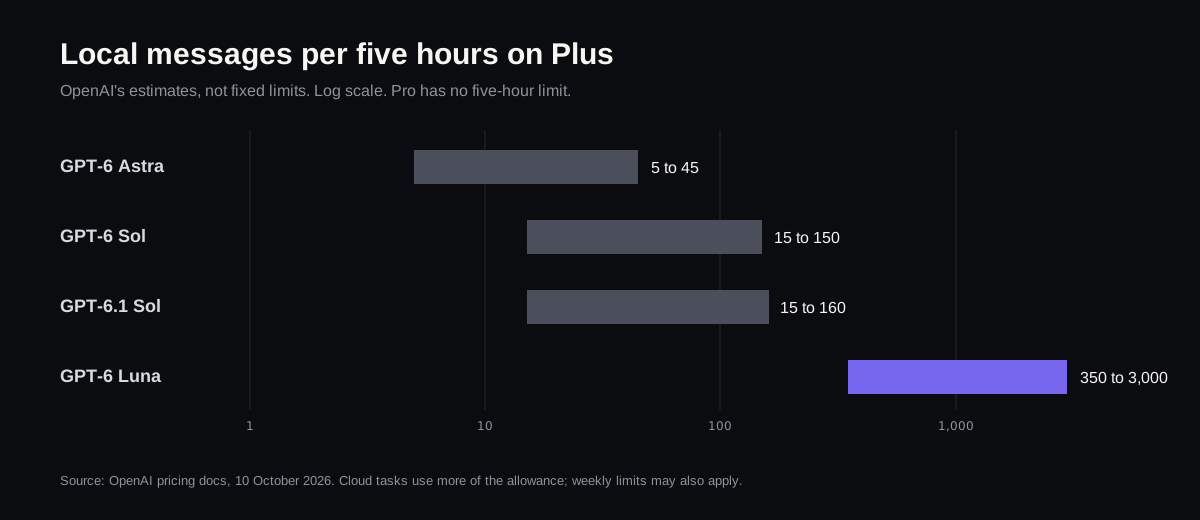
OpenAI is careful to say "these estimates are not fixed message limits". The spread depends on how big each request is and how much of the codebase it reads. Cloud tasks use more of the allowance than local messages, and "weekly limits may also apply", with no weekly numbers published for any plan. Pro plans have no five-hour limit at all, and neither does a Business Premium seat.
Speed costs extra. Fast mode spends included usage 2.5 times as quickly, and Ultrafast, available on Pro 500 and some Enterprise plans, spends it eight times as quickly.
When you hit the limit, a turn already running can finish. After that, Plus and Pro users can buy credits without upgrading, and anyone can keep working locally with an API key at API prices.
What a Codex credit costs
A credit is worth about four cents. OpenAI's student page values 2,500 credits at $100, which matches the original launch price of 1,000 credits for $40. Credits are charged per million tokens: GPT-6.1 Sol costs 50 credits per million tokens in and 250 per million out, and Luna costs 2.5 in and 12.5 out.
At four cents a credit, those rates work out to exactly OpenAI's API list prices, $2 and $10 per million tokens for GPT-6.1 Sol. So buying credits isn't a discount; it's the API price paid through your ChatGPT account. Fast and Ultrafast on purchased credits cost two and six times as much. Plus and Pro users buy them in Settings, under Usage.
Codex with an API key
Signing in to the CLI with an API key instead of a ChatGPT account means paying standard API rates for every token. Per million tokens in and out, GPT-6.1 Sol is $2 and $10, GPT-6 Luna is $0.10 and $0.50, and GPT-6 Astra is $10 and $50 (API pricing).
The catch is that an API key only covers local work. Cloud tasks, GitHub review, Slack and Linear need a ChatGPT plan. Many older guides still quote gpt-5.3-codex as "the Codex model"; it's still on the API, but for people signed in with ChatGPT it was retired in May.
What changed in 2026
- 2 February: the Codex app launched, with limited-time free access on Free and Go.
- 2 April: credits switched to token-based pricing.
- 9 April: the $100 Pro tier arrived, at 5x Plus.
- 24 August: Business got Premium seats.
- 29 September: Pro 500 launched, and the $200 tier reopened with a smaller allowance. Press reports quoting OpenAI put it at 10x Plus instead of 20x, with existing subscribers keeping the old allowance until 29 October.
- 14 October: GPT-5.5 retires from Codex for ChatGPT sign-ins, which will make most rate tables on page one out of date.
Which plan, by how you work
- Trying it out: Free or Go, on the desktop app.
- A developer coding most days: Plus, with credits for busy weeks.
- Long sessions that keep hitting the five-hour wall: Pro 100, the cheapest plan with no five-hour limit.
- A team of developers: Business, with Premium seats only for the heaviest users.
- Scripts and automation that never need cloud tasks: an API key, paying per token.
If you're pricing Codex for people who don't code
Codex assumes a developer is driving. Every plan above is per person, and each person needs the app running locally or a cloud task that ends in a diff someone can read. Pricing it for a product manager or a marketer means buying a seat for someone who still can't judge the result.
Refinar is priced for that team instead. One plan covers the team, from $50 a month for about 100 requests with 20 teammates included (pricing). It opens your app from GitHub, runs it in a cloud preview, and lets whoever is asking describe a change or click the part they mean, then publish it or send it for review. Anything touching sign-in, billing or stored customer records waits for a developer to approve it (Refinar for product managers).
If the people asking for changes outnumber the people who code, try Refinar on your app before buying seats.